


IMC coating technology in practice
Efficient surface finishing of PUR parts: IMC coating technology in practice
If you attended this year's Spectra Customer Days, you likely caught the presentation by our specialist Michael Markytán, who focused on the challenges of IMC coatings and PU pastes. Given the increasing demands for production efficiency and surface quality of polymer parts, we are providing a brief overview of how In-Mold Coating (IMC) works and the process advantages it offers.
.png)
The IMC (In-Mold Coating) process principle
IMC technology eliminates the need for post-painting finished parts by creating a functional surface directly during the molding process.
- Application into the mold: A layer of IMC coating is sprayed onto the separated surface of the open mold, ideally in two to three layers rotated 90° relative to each other to ensure optimal bonding of the sprayed layer.
- Reaction and chemical bonding: The liquid polyurethane (PUR) system is dosed into the mold, and the mold is closed. During the PUR system reaction, the coating chemically cross-links with the substrate material.
- Demolding: The result is a finished part with an integrated functional surface layer.
Specific material properties and modifications
Implementing IMC coatings can eliminate surface defects in PUR foams (such as porosity) while defining precise physical-chemical properties for the part based on its application segment:
- Automotive industry (engine covers, interior parts): Ensuring high surface reproducibility (from matte to high gloss) and perfect color homogeneity on visible surfaces.
- Medical technology (supports, padding): Varnish formulations with biocompatible properties that meet strict health standards.
- Mechanical and chemical resistance: Increased resistance to abrasion, scratching, and degradation caused by UV radiation (high color stability for outdoor use).
- Fire safety: Option to integrate effective flame retardants directly into the surface layer, in compliance with certified self-extinguishing standards.
Processability of modern 2K systems - Contemporary two-component (2K) IMC systems no longer suffer from short pot life. Once mixed, the varnishes remain stable for up to 24 hours, which significantly simplifies on-site logistics and reduces technological waste.
Colorimetry and shade accuracy
We guarantee precise color reproduction according to standardized color charts (RAL, CMYK, Pantone). Furthermore, in collaboration with our suppliers, we can perform a reverse analysis of a provided physical sample (part) and mix an identical shade tailored to your application.
Practical example: Color unification of automotive interiors
Achieving an identical color shade and texture across different types of substrates (rigid plastics, softened PUR foams, integral foams) is a key challenge in the automotive industry.
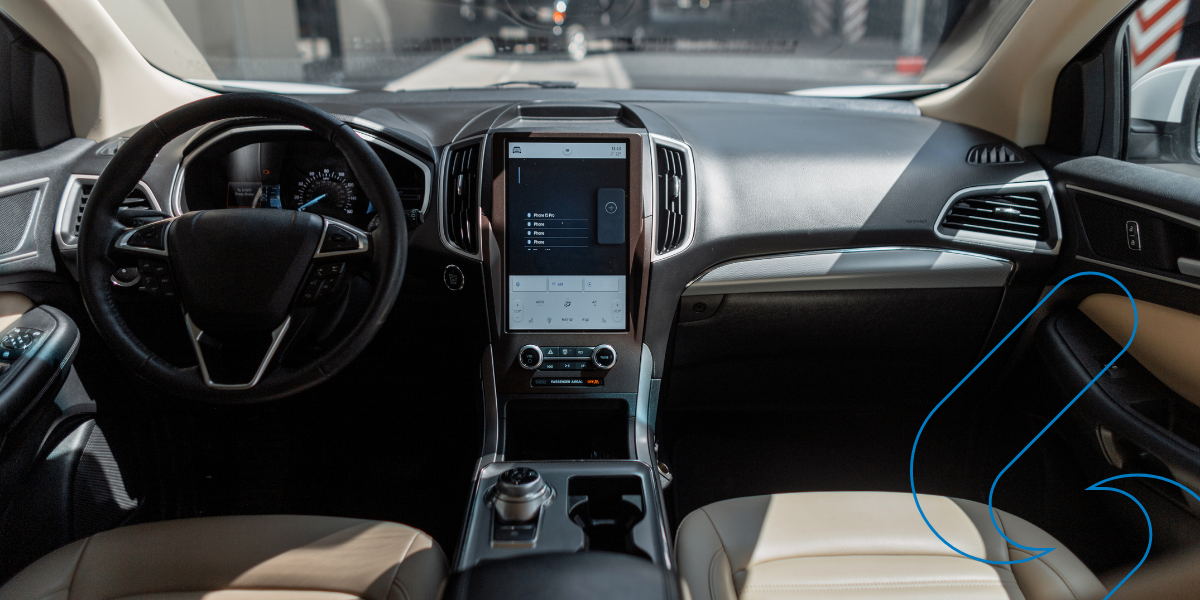
As shown in the attached photo of the dashboard, perfect visual harmony and unification of disparate components are achieved precisely through the comprehensive application of technology In-Mold Coating. Color-unified car interior thanks to IMC coating.
Looking to optimize your production?
IMC technology is an effective solution that reduces scrap rates, helps meet demanding requirements for visible parts, and provides products with standardized and measurable surface properties.
Are you considering introducing IMC coatings into your production process or optimizing an existing application? Michael Markytán and our technical team are available for consultation on material data sheets, technological procedures, and testing.

Mgr. Michael Markytán
Trade and Technical Support
Other news
První SPECTRA DAYS jsou za námi
NOVINKA Spectra-RUB RAW 30: Univerzální řešení pro čistou a efektivní separaci kaučuků!
